

If you’ve spent any time researching AI SEO tools lately, you already know the feeling: seventeen browser tabs open, every review says something different, half the “top 10” lists read like sponsored content, and you’re no closer to a decision than when you started. You’re not alone — and the confusion usually isn’t about complexity. It’s about the fact that most AI SEO guides are written to sell you something rather than help you choose wisely.
Here’s what most guides won’t tell you: the best AI SEO tool for a solo blogger running a WordPress site on a shoestring budget looks nothing like the best tool for an agency managing 40 client campaigns. Matching the tool to your actual workflow — not to a reviewer’s affiliate stack — is what determines whether a subscription pays for itself or quietly drains your monthly budget.
This guide is built for skeptics. We’ll cover what AI SEO tools genuinely do well, where they fall short, how to calculate real ROI before you commit, and which tools match which specific situations. No ranking by affiliate commission. No burying the cons in footnotes.
What AI SEO Tools Actually Do (And What They Don’t)

AI SEO tools automate the time-consuming analytical and research tasks in SEO — keyword research, content scoring, technical audits, competitor analysis — so you can focus on strategy and execution. What they cannot do is replace your judgment, understand your audience’s nuanced needs, or guarantee rankings.
Think of it this way: AI handles the data and drafts; humans handle the strategy and voice. That framing matters enormously before you spend a dollar on any of these platforms.
What AI SEO Tools Are Actually Good At
The honest list of tasks where AI SEO tools deliver measurable time savings is shorter than the marketing copy suggests, but the savings in those areas are real:
Keyword research and clustering. What used to take a few hours of spreadsheet work can now be done in minutes. Research consistently shows that AI-powered SEO tools save up to 50% of the time spent on manual tasks like keyword research and data interpretation. That’s real time back in your week.
Content optimization scoring. Rather than guessing whether your article covers the right topics, tools like Surfer SEO and Clearscope analyze the top-ranking pages for your target keyword and give you a data-driven blueprint. The guesswork is replaced by structured guidance.
Technical SEO auditing. Crawling a site for broken links, duplicate content, missing meta tags, and page speed issues used to require a technical background. AI tools surface these problems in a prioritized list, in plain English.
Competitive research. Understanding what your competitors rank for, which content performs best, and where gaps exist in their strategy used to require hours of manual research. AI compresses this into minutes.
Content briefs and outlines. Generating a research-backed brief — complete with target keywords, questions to answer, and structural guidance — is one of the highest-ROI uses of AI in a content workflow.
What AI SEO Tools Cannot Do (Honest Trade-offs)
Here’s where the marketing copy departs from reality. AI doesn’t understand a brand’s competitive positioning, an audience’s nuanced needs, or the business context behind why certain keywords matter more than others. A tool might generate a keyword cluster, but it takes human insight to decide which of those keywords are actually relevant for your audience.
AI-generated content that isn’t carefully edited presents a specific risk. Google’s guidance states that using AI tools to generate many pages without adding value for users may violate their spam policy on scaled content abuse. One independent experiment by SE Ranking — creating 20 websites populated entirely with AI-generated content — showed initial gains that were then wiped out after a core update. Publishing AI output without meaningful human editing is a short-term tactic with long-term downside.
AI tools also cannot build genuine authority, earn backlinks, or create the unique expertise signals that Google’s E-E-A-T guidelines reward. They are force multipliers for skilled operators — not shortcuts around the fundamentals.
Finally: the tools show data immediately, but SEO itself takes time. Expect 3–6 months for meaningful ranking changes from new efforts. Any tool that promises faster results deserves serious scrutiny.
The 11 Best AI SEO Tools for Different Use Cases
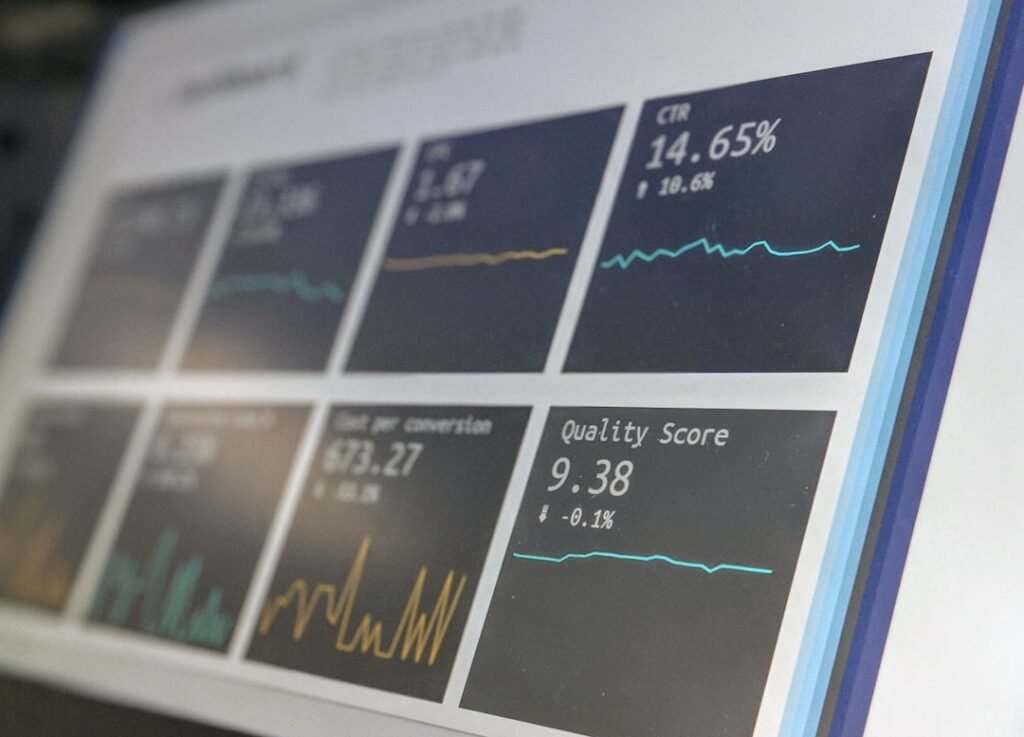
No single tool wins for every situation. The table below organizes the leading AI SEO tools by the use case they serve best, their honest starting price, and the key trade-off you need to understand before buying. Prices reflect current public pricing and should be verified before purchase.
| Tool | Best For | Starting Price | Key Strength | Honest Trade-off |
|---|---|---|---|---|
| Semrush One | All-in-one marketing teams & agencies wanting AI search visibility | $199/mo | Tracks brand visibility across ChatGPT, Google AI Overviews, and Perplexity; massive 43-trillion backlink database | Expensive for solo users; AI features feel layered on top of an older platform; steep learning curve |
| Ahrefs | Agencies & SEOs focused on backlink analysis and competitive research | $129/mo (Lite) | Industry-leading backlink database; clean UX; unlimited verified domains on higher plans | No free trial on standard plans; AI content features lag behind dedicated tools; credit system limits usage |
| SE Ranking | Small businesses & freelancers needing comprehensive SEO without premium pricing | ~$52/mo (Essential) | Full-stack SEO toolkit at roughly half the cost of Semrush; AI Overviews tracker included; flexible keyword-based pricing | Backlink database is smaller than Ahrefs; AI features are improving but not market-leading; UI feels less polished |
| Surfer SEO | Content teams publishing at volume who want real-time NLP optimization | $99/mo (Essential) | Best-in-class content scoring; Google Docs integration; real-time NLP suggestions; 4.8/5 on G2 from 294+ reviews | Can encourage over-optimization if used without editorial judgment; Scale plan needed for high-volume teams at $219/mo |
| Clearscope | Editorial teams and brands where content quality is non-negotiable | $189/mo | Cleanest UX in the category; A–F grading system; editorial-friendly; unlimited user accounts; 4.9/5 on G2 | Most expensive content optimization tool; fewer features beyond content scoring; not suited for solo creators on a budget |
| Frase | Solo creators and small teams needing affordable research + AI writing | ~$38/mo (annual) | Fast brief generation; dual focus on SEO and GEO; great for solopreneurs; most affordable in content optimization category | Term recommendations less comprehensive than Surfer; AI output needs more editing; smaller dataset than competitors |
| MarketMuse | Large sites needing strategic topical authority planning | $100+/mo | Maps your entire site’s topical gaps; content inventory analysis; strategic planning depth unavailable elsewhere | Overkill for small sites; expensive at scale; better for planning than day-to-day writing |
| RankIQ | Bloggers focused on long-tail keyword opportunities | ~$49/mo | Curated keyword library targeting lower-competition terms; solid content briefs; built specifically for bloggers | Limited feature set outside of blogging; not suited for e-commerce or agency workflows |
| Screaming Frog | Technical SEO auditing for established sites | Free (limited) / ~$259/yr | Unmatched depth for technical crawl analysis; AI-driven issue prioritization in 2025 version; plain-English recommendations | Requires more technical knowledge than cloud-based tools; desktop app, not SaaS; not beginner-friendly |
| Copy.ai | Solopreneurs who need efficient content creation with built-in SEO workflows | Free plan / $36/mo Pro | SEO workflows from keyword to finished content; strong automation; good for content at scale | Not a dedicated SEO tool; requires pairing with a keyword research platform for best results |
| Google Search Console + GA4 | Every website owner, regardless of budget | Free | Real search performance data directly from Google; shows actual queries driving clicks; no estimation involved | Shows you what’s happening, not what to do about it; requires pairing with a strategy layer |
A practical note on the free tier: Google Search Console and GA4 are genuinely powerful and genuinely free. Before paying for any tool on this list, ensure you’ve connected GSC and are actually reading the data it provides. Many small business owners pay for keyword tools while ignoring the actual query data sitting in their free Google account.
How to Choose the Right AI SEO Tool for Your Workflow

Decision fatigue around AI SEO tools is real. If you’re currently paralyzed by options, here’s a framework that cuts the list to one or two realistic candidates in under five minutes. Start with your bottleneck, not a feature list.
Step 1: Identify Your Biggest SEO Bottleneck
Ask yourself where you are currently losing the most time or getting the worst results. Be honest — most people need to solve one problem well before they need a second tool:
“I don’t know which keywords to target” → Start with SE Ranking or the free keyword research inside Google Search Console. Don’t buy Semrush or Ahrefs until you understand what keyword difficulty means and how to evaluate search intent.
“My content doesn’t rank despite good keyword targeting” → This is a content optimization problem. Try Surfer SEO (best balance of features and price) or Frase (if you’re budget-conscious and value brief generation).
“I need to produce more content faster” → Frase or Copy.ai handle research-to-draft workflows. Pair with Surfer for optimization. But remember: you don’t need a huge budget to start leveraging AI for SEO — a single full-stack platform combined with Google’s free tools is more than enough to get started.
“I manage multiple client sites and need competitive intelligence” → Semrush One or Ahrefs are the right tier. Ahrefs is generally a better fit for agencies managing multiple sites, supporting unlimited verified domains on higher plans. For solopreneurs and small businesses who want broader marketing data, Semrush is the stronger option.
“My site has technical SEO problems I can’t diagnose” → Run a Screaming Frog crawl or use the site audit built into SE Ranking before buying anything more expensive.
“I want to know if my brand appears in ChatGPT or Google AI Overviews” → This is a newer need. Semrush One tracks over 100 million prompts across ChatGPT, Google AI Mode, Perplexity, and AI Overviews — currently the most comprehensive AI visibility tracking available in a mainstream tool. Otterly.ai ($29/mo) covers the basics if you only need monitoring without a full SEO suite.
Step 2: Match Tool to Budget Tier
Here’s a practical framework by spending tier. These aren’t ranked by quality — they’re ranked by the point at which additional spend starts generating diminishing returns for most users at that stage.
Under $50/month: Google Search Console (free) + SE Ranking Essential (~$52/mo) is the best starting stack for most small businesses. You get accurate rank tracking, site auditing, keyword research, and competitive insights — the full foundation — without enterprise pricing.
$50–$120/month: Add Surfer SEO ($99/mo) if content optimization is your growth lever. Add Frase ($38/mo) if content production speed is the bottleneck. Don’t stack both at this stage.
$120–$200/month: Ahrefs Lite ($129/mo) for backlink-heavy competitive research. Or Clearscope ($189/mo) for established editorial teams where content quality is the priority.
$200+/month: Semrush One ($199+/mo) for teams needing integrated AI visibility tracking alongside traditional SEO. MarketMuse for large sites with strategic content planning needs. At this level, you should have clear evidence from a lower-tier tool that the investment is warranted.
Step 3: Always Trial Before Committing
Most tools offer free trials or money-back guarantees. Trial before committing. Budget for the learning curve — most tools take two to four weeks to use efficiently. A critical gotcha to watch for: always check the renewal rate before committing. Several tools offer discounted first-year pricing that jumps significantly on renewal. Ask the sales team directly, or check the billing page before entering a credit card.
If you’re managing a WordPress site and unsure which tools integrate cleanly with your existing setup, WordPress AI Tools can help you evaluate options specific to your configuration — reach out when you’re ready for a second opinion.
Critical Gotchas: Limitations You Need to Know Before Buying
The limitations of AI SEO tools are rarely the lead of any review. Here’s what the fine print usually doesn’t say clearly enough.
1. AI Visibility Tracking Is Still Unreliable
If a tool promises to tell you exactly how often your brand appears in ChatGPT responses, treat that data as directional rather than authoritative. Independent testing has found documented accuracy issues — one comparison found Ahrefs Brand Radar reporting 3 brand mentions where there were actually 123 on ChatGPT. The category is improving rapidly, but no platform has cracked reliable LLM citation tracking at scale yet. Use this data for trends, not absolute scores.
2. Content Score ≠ Rankings
A perfect content score in Surfer SEO or Clearscope does not guarantee a first-page ranking. These tools optimize for on-page signals that correlate with what’s currently ranking — but backlinks, domain authority, user behavior signals, and site speed all play significant roles that no content scoring tool controls. Treat content scores as a floor, not a ceiling.
3. AI Content Still Needs Heavy Editing
Every tool in the category that generates AI-written content requires meaningful editorial review before publishing. 93% of marketers review AI-generated content before publishing — for good reason. Unedited AI output tends to be generic, occasionally factually incorrect, and lacking the E-E-A-T signals (Experience, Expertise, Authoritativeness, Trust) that Google’s quality raters look for. Use AI for first drafts and structure; your expertise must show up in the final version.
4. Credit-Based Pricing Can Surprise You
AI SEO tools cost $15–$499 per month for small teams, with total annual costs ranging from $780 to $7,788 when including hidden fees like user seats, API limits, and content report overages. Credit-based models — where each keyword research query, content report, or audit run consumes credits — can burn through your allocation much faster than expected if you’re in a high-production phase. Understand the credit model before committing, especially on platforms like Ahrefs, where the Starter plan limits usage significantly.
5. Traditional SEO Foundation Still Required for AI Search
One of the more persistent myths in the current AI hype cycle is that optimizing for AI Overviews and LLMs requires a completely different approach from traditional SEO. AI tools like ChatGPT, Perplexity, and other large language models pull their answers from top-ranking search results. If your site isn’t ranking in Google, it likely won’t show up in AI-generated answers either. Build the traditional SEO foundation first. The AI visibility layer comes on top of it, not instead of it.
6. Watch for “AI-Washing” in Tool Marketing
The phrase “AI-powered” now appears in virtually every SEO tool’s marketing copy, regardless of how substantive the AI component actually is. Some tools have genuinely integrated machine learning into their core functionality. Others have added an AI writing button to what is otherwise a traditional tool. Ask specifically: what does the AI do, and how does it differ from a rules-based system? If the vendor can’t answer clearly, that tells you something.
Real ROI Calculations: What These Tools Actually Cost vs. Save

A tool needs to save at least twice its monthly cost in time or generate measurable revenue to justify the expense. Here’s how to do that math before you buy, not after six months of hoping it works out.
The Core ROI Formula
Before paying for any AI SEO tool, estimate your break-even point:
Monthly ROI = ((Organic Traffic Value + Time Savings Value) – Tool Cost) / Tool Cost × 100
For a practical example: if you’re a freelancer charging $75/hour and a $99/month tool saves you 3 hours per month on keyword research and content briefs, that’s $225 in recovered billable time against a $99 investment — a 127% return before any traffic benefit is counted. That math works. But if the same tool saves you 45 minutes a month, it doesn’t justify the spend at that billing rate.
What the Data Actually Shows
The aggregate numbers on AI SEO ROI are encouraging but should be read with context. A Semrush study found that almost 70% of businesses report higher ROI from using AI in SEO, with just 1% reporting decreased ROI. That’s a meaningful signal — but “higher ROI” includes a wide range of outcomes, and the gains are heavily concentrated in users who committed to learning the tools properly.
On productivity: HubSpot’s research shows that 86% of marketers using AI for creative tasks save an hour per day — across a team, that compounds into meaningful efficiency gains. For solo operators, teams save more than 5 hours per week on average with AI in content and SEO workflows.
On rankings: for teams under 10 people, expect 3–6 months to see measurable results with proper implementation. Anyone promising faster timelines is setting expectations that the tools themselves cannot meet — the tools help you track progress and make smarter decisions faster, but they don’t speed up Google’s timeline.
Real Break-Even Scenarios by Role
| Role | Tool Recommended | Monthly Cost | Hours Saved/Month (Est.) | Break-Even Hourly Rate Needed |
|---|---|---|---|---|
| Solo blogger | Frase + GSC | ~$38 | 4–6 hrs (briefs, research) | ~$6–10/hr (almost always justified) |
| Content freelancer | Surfer SEO Essential | $99 | 6–10 hrs (optimization, briefs) | ~$10–17/hr (justified at most rates) |
| Small business owner | SE Ranking Essential | ~$52 | 5–8 hrs (audits, tracking, research) | ~$7–10/hr (almost always justified) |
| In-house marketing team | Semrush One | $199 | 15–25 hrs (full workflow) | ~$8–13/hr (justified for 2+ person teams) |
| Agency (5+ clients) | Ahrefs + Surfer | ~$228 | 20–40 hrs (research, optimization) | ~$6–11/hr (easily justified at agency rates) |
The honest pattern here: AI SEO tools are almost always financially justified for anyone billing their time at professional rates. The real question is not “can I afford this?” — it’s “will I actually use this consistently?” A tool you open twice a month returns zero ROI regardless of its feature set. Done is better than perfect: pick one tool, use it consistently for 90 days, and measure the specific impact before adding another.
If you’re unsure which tools fit your specific WordPress setup and workflow, the team at WordPress AI Tools can help you map the right stack to your situation — no pressure, no generic advice.
Frequently Asked Questions About AI SEO Tools
Your Next Steps: Start Small, Scale What Works
If there’s one principle that cuts through everything in this guide, it’s this: start with the smallest tool that solves your biggest problem, use it consistently for 90 days, measure the outcome, and only then add a second tool. The marketplaces for AI SEO tools are full of teams spending $500/month on overlapping platforms while getting worse results than a colleague using GSC plus a $52 SE Ranking subscription they actually understand.
Here are three concrete next steps based on where you are right now:
Phase 1 — If you haven’t started yet: Connect Google Search Console today (it’s free, and the data is irreplaceable). Read the Performance report. Find the 10 queries where you have impressions but zero clicks. That’s your first content optimization opportunity, and it costs nothing.
Phase 2 — If you’re ready for a paid tool: Match your bottleneck to the framework in this guide. If content quality is the gap, try Surfer SEO’s 7-day trial. If you need a full stack at a reasonable price, start SE Ranking’s 14-day trial. Use it for your actual workflow, not a demo keyword — that’s the only way to evaluate real fit.
Phase 3 — If you’re already using tools but not seeing results: Audit your usage before upgrading or switching. Most ROI problems aren’t tool problems — they’re consistency and implementation problems. Integrate tools into existing processes rather than building entirely new ones. The best AI SEO tool is the one you actually use, consistently, over months — not the one with the most impressive demo.
At WordPress AI Tools, we work with small business owners, content creators, and solopreneurs every day who are navigating exactly this decision. Contact WordPress AI Tools for personalized guidance tailored to your specific WordPress setup and budget — no pressure, no generic advice, just honest help matching the right tools to your actual workflow.
Frequently Asked Questions
Do AI SEO tools actually improve rankings?
Yes, but not directly or immediately. AI SEO tools improve the quality and relevance of your content, surface technical issues, and help you target the right keywords — all of which contribute to better rankings over time. Expect 3–6 months for meaningful ranking changes. The tools accelerate smart decisions; they don’t bypass Google’s timeline.
What is the best AI SEO tool for a small business with a tight budget?
Start with Google Search Console (free) to understand what’s actually driving traffic to your site. For a paid tool, SE Ranking’s Essential plan at around $52/month offers the best combination of features — rank tracking, site audits, keyword research, and competitive analysis — at a price accessible to most small businesses. Add a content optimization tool like Frase (around $38/month on annual billing) once content production is your primary bottleneck.
Can AI SEO tools write content that ranks?
AI tools can generate first drafts and content outlines, but AI-generated content that isn’t meaningfully edited and enriched with human expertise rarely ranks well for competitive terms. Google’s guidelines explicitly warn against scaled AI content that doesn’t add value. Use AI for speed and structure, but your unique expertise and editorial judgment must shape the final published piece.
Is Surfer SEO or Clearscope better for content optimization?
It depends on your team size and budget. Surfer SEO ($99/month) offers more features per dollar, built-in AI writing assistance, and a real-time NLP scoring system that’s ideal for content teams publishing at volume. Clearscope ($189/month) wins on interface simplicity, editorial-friendliness, and unlimited user seats — making it better for larger teams where non-technical writers need clear guidance without SEO jargon. Frase ($38/month) is the right choice if you’re a solo creator who needs both brief generation and optimization at a lower price point.
Do I need to optimize for AI Overviews differently from regular SEO?
Not as differently as most vendors suggest. Research consistently shows that pages cited in AI Overviews predominantly come from sites already ranking in Google’s top 10. The fundamentals — high-quality content, strong E-E-A-T signals, proper structured data, and good technical SEO — remain the foundation. Structural improvements like using Q&A formats, bullet points, and clear factual statements do help with AI citation rates, but these are good SEO practices in any context.

