

Here’s what most AI roundups won’t tell you: not every “new AI” launch deserves your attention. The landscape has hit a point where a genuinely transformative model drops one week, and a dozen copycat wrappers flood the market the next. If you’re a small business owner, blogger, or solopreneur trying to figure out what’s actually worth your time and budget, this guide cuts through the noise — covering only the breakthrough models, the tools that solve real problems by category, and honest context on what AI can and cannot do for your business right now.
What’s New in AI This Year
The short answer: AI stopped being experimental and became operational. Artificial intelligence went from experimental technology to core business infrastructure in 2025. But there are three specific shifts that matter most for small business owners and content creators.
The Open-Source Earthquake
The biggest story of the past year wasn’t a ChatGPT update — it was the rise of powerful open-source models that anyone can use for free. Chinese firm DeepSeek released its R1 model, which rocketed to second on the Artificial Analysis AI leaderboard, despite being trained for a fraction of the cost of its Western competitors. Unlike its Western counterparts at the top of the league tables, DeepSeek R1 is open-source — anyone can download and run it for free. This put serious pressure on paid AI subscriptions and forced every major lab to rethink pricing strategy.
Reasoning Models: AI That Actually Thinks
When ChatGPT was first released, it didn’t think — it just answered. “Reasoning models,” first previewed in 2024, generate hundreds of words in a “chain of thought,” often obscured from the user, to come up with better answers to hard questions. The results speak for themselves: reasoning models from Google DeepMind and OpenAI won gold in the International Math Olympiad and derived new results in mathematics. For everyday business use, this translates to AI that can actually analyze your data, spot logical gaps in your strategy, and write better code — not just generate polished-sounding fluff.
Agentic AI: From Chatbot to Co-Worker
The newest wave of AI doesn’t just respond to prompts — it takes action. OpenAI unveiled the ChatGPT Agent, embedding autonomous coding, web research, and tool use directly within the chat interface. Autonomous agents, or “agentic” AI applications, are emerging in both software and hardware agents. Microsoft’s Copilot agents now pervade software suites, handling tasks from coding to meeting summaries. Think of it like having a junior assistant who can browse the web, draft reports, and send emails — but who still needs your oversight before hitting send.
The Adoption Numbers Are Real
This isn’t hype. 78% of organizations now use AI in at least one business function, up from 55% in 2023. For small businesses specifically, investment in AI among SMBs has increased to 57% in 2025, up from 42% in 2024 and 36% in 2023 — a 58% rise over two years. The honest limitation? The 70–85% AI project failure rate and the jump from 17% to 42% in abandoned initiatives shows how hard implementation really is. Starting small and solving one specific problem beats launching a sweeping “AI transformation” initiative every time.
Breakthrough AI Models and Technologies
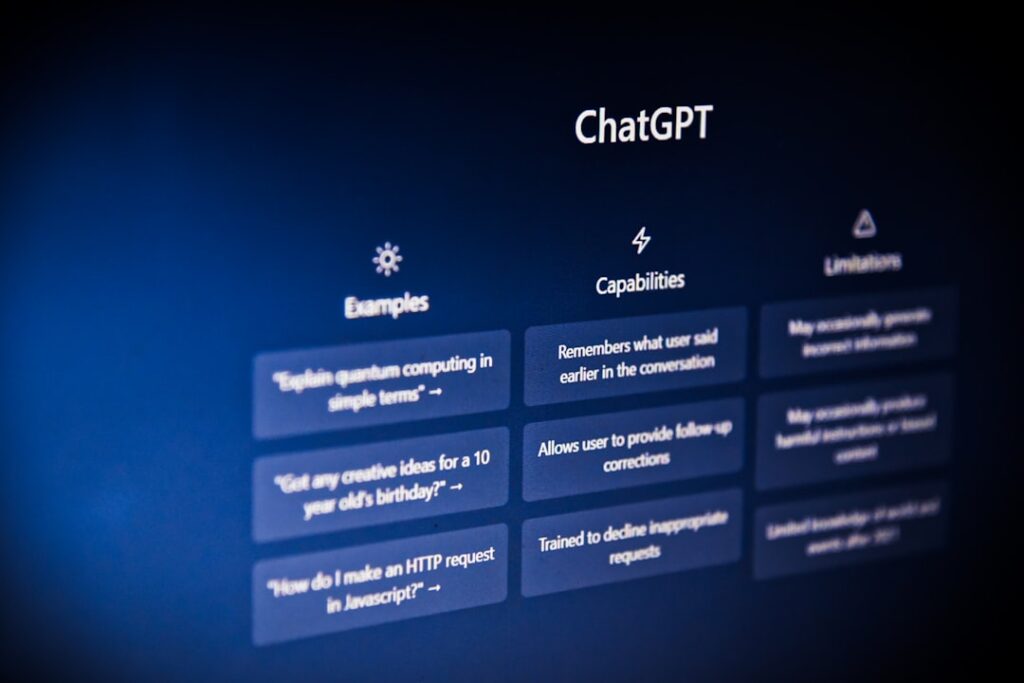
The model landscape has never moved faster — or been more confusing. Here’s a practical breakdown of the key releases that actually changed what’s possible, not just what’s headlines.
OpenAI: From GPT to Agents
OpenAI’s o3 model achieved 87.5% in the ARC-AGI benchmark, 25.2% in the Frontier Math Benchmark (compared to under 2% in previous models), and 87.7% in PhD-level science questions. On the coding front, OpenAI released Codex, an autonomous code agent in ChatGPT powered by the o3 model, for writing code, debugging, testing, and creating GitHub Pull Requests. OpenAI also introduced a tiered model lineup — GPT-5.4 mini is described as their strongest mini model yet for coding, computer use, and subagents, while GPT-5.4 nano is their cheapest GPT-5.4-class model for simple high-volume tasks.
Anthropic: Claude Built for Deep Work
Anthropic released Claude 4 Opus and Claude Sonnet 4: Opus 4 offers a hybrid “Deep Thought” mode with enhanced long-term context and 7-hour autonomous operation; Sonnet 4 focuses on improved math and coding performance. For writers and developers specifically, Claude remains a top pick — independent testing found that Claude nails conversational style and format better than competing models when given examples of your best work.
Google: Gemini 3 and the Multimodal Push
Google significantly advanced its model capabilities with breakthroughs on reasoning, multimodal understanding, model efficiency, and generative capabilities, beginning with the release of Gemini 2.5 in March and culminating in the November launch of Gemini 3 and the December launch of Gemini 3 Flash. The creative media side also leveled up significantly: Google released Veo 3, a video generation model for synchronized 4K video with natural audio integration, and Imagen 4, an advanced image model with deeper contextual understanding and artistic style support.
Nvidia’s Open Agentic Models
Nvidia released Nemotron 3, its latest series of open reasoning models specifically optimized for “agentic AI” systems that can operate across multiple agents and long contexts. The release includes three sizes — Nano (30B), Super (100B), and Ultra (500B) — along with new reinforcement learning tools and open datasets. For developers building custom AI workflows, this is a meaningful open-source alternative to closed API solutions.
The Multimodal Shift
One of the defining features of generative AI in 2025 is its multimodal capabilities. AI systems can now handle text, images, audio, and video simultaneously, streamlining workflows. For example, a single AI tool could write a blog post, generate accompanying visuals, create a video summary, and convert the content into a podcast episode. The trade-off is that these features often sit behind premium pricing tiers — make sure the multimodal capability maps to a real workflow need before upgrading.
New AI Tools by Category: A Practical Comparison
If you’re feeling overwhelmed by options, you’re not alone. 47% of small business owners say it’s difficult to choose the right AI tools. This table maps the most relevant new AI tools to the jobs they actually do — so you can match a tool to your need, not just the loudest marketing claim.
| Category | Top Tools (2025) | Best For | Starting Price | Honest Limitation |
|---|---|---|---|---|
| AI Chatbots / Writing | ChatGPT (GPT-5.4), Claude Sonnet 4, Gemini 3 | Drafting content, research, brainstorming, email | Free – $20/mo | Most “AI writing tools” are just wrappers around these three — go direct |
| Coding Assistance | Windsurf, OpenAI Codex, GitHub Copilot, Claude Code | Developers building features, debugging, PR generation | Free – $200/mo | Still requires code review; can suggest functions that don’t exist |
| Image Generation | Google Nano Banana 2, Midjourney, GPT Image 1 | Marketing visuals, product design, branding | Free – $30/mo | Premium quality costs more; style control varies widely |
| Video Generation | OpenAI Sora 2, Google Veo 3, Kling o1 | Short-form video, marketing clips, social content | $20 – $50/mo | Realistic physics still imperfect; long-form video is expensive |
| AI Research | Perplexity Pro, Claude Deep Research, ChatGPT Research | Market research, fact-finding, competitive analysis | Free – $20/mo | Hallucinations still occur; always verify critical facts from primary sources |
| Coding (No-Code) | Replit, Bubble, Google Antigravity | Non-technical users building apps and automations | Free – $25/mo | Complex apps still need a developer to harden and deploy |
| AI Audio / Music | Suno 4.5, Udio, ElevenLabs | Podcast intros, background music, voice cloning | Free – $22/mo | Licensing and copyright status of AI audio varies by platform |
A critical gotcha to watch for: renewal pricing on paid AI tiers can jump significantly after introductory periods. Always check the annual vs. monthly billing difference before committing, and audit quarterly whether the time you’re saving justifies the cost. A tool needs to save at least twice its monthly cost in time to justify the expense.
How New AI Is Changing Different Industries
AI’s real-world impact is no longer theoretical. Across healthcare, finance, education, retail, and content creation, the technology is solving specific, measurable problems — though each sector faces its own set of honest trade-offs.
Healthcare: Diagnosis at Speed

Researchers at the University of Michigan developed an AI model capable of diagnosing coronary microvascular dysfunction (CMVD), a form of heart disease that is notoriously difficult to detect, using only a standard 10-second EKG strip. Previously, CMVD required advanced, expensive imaging or invasive procedures to identify. In clinical tests, the AI system accurately identified the condition within seconds. On the drug discovery side, researchers utilized AI to design a novel molecule that significantly boosts the effectiveness of chemotherapy in treating pancreatic cancer. The AI-generated compound targets specific resistance mechanisms in tumor cells, making them more vulnerable to standard treatments.
Major healthcare institutions are leaning in hard: Mayo Clinic is launching a new $10 million artificial intelligence education program that will train staff and medical professionals to deploy AI technology ethically for patients, while Mount Sinai Health System in New York is opening the Hamilton and Amabel James Center for Artificial Intelligence and Human Health. The honest limitation: one of the biggest challenges is reimbursement — specifically, the reimbursement of new AI-driven devices and processes. Even for FDA-cleared devices, the path to reimbursement is unclear and slow-moving.
Finance: Fraud Detection and Smarter Risk
Fraud detection is one area where AI truly excels. By analyzing transaction patterns and detecting anomalies, AI systems can identify fraudulent activities in real-time, allowing banks to take immediate action and protecting both the institution and its customers from financial loss. Beyond fraud, AI’s capacity to evaluate historical data and detect developing trends assists traders and investors in forecasting market moves. AI-driven trading systems can use predictive analytics to generate immediate suggestions based on economic data, interest rates, and geopolitical events.
Retail and E-Commerce: Personalization at Scale
69% of retailers using AI say it has already helped grow their revenue. Nearly a third report gains between 5% and 15%, while 15% saw increases above 15%. For smaller online stores, the most accessible applications are AI-powered product recommendations, automated email personalization, and inventory forecasting. Of the 29% of e-commerce teams that have adopted AI into their daily workflows, they’ve experienced an average time savings of 6.4 hours per week.
Education: Personalized Learning Paths
There are many applications of AI in education, like personalizing student learning and automating administrative tasks. Adaptive learning platforms apply ML algorithms to analyze student performance data and provide personalized study materials. For example, Coursera uses AI algorithms to recommend courses and learning resources based on a student’s interests. However, in the U.S., 81% of K–12 CS teachers say AI should be part of foundational CS education, but less than half feel equipped to teach it.
Content Creation and Marketing: The Productivity Multiplier
For bloggers, solopreneurs, and small business marketers, this is where new AI delivers the most immediate ROI. A study found that business professionals could write 59% more work-related documents per hour, and programmers could code 126% more projects each week using AI tools. The honest framing: AI accelerates your work but doesn’t replace your judgment. On average, SMB employees save 5.6 hours per week using AI tools — but only when those tools are used strategically on actual bottlenecks, not as a novelty.
If you’re using AI to accelerate your WordPress content workflow, our in-depth guides on AI tools for WordPress break down exactly which tools integrate cleanly with your publishing setup without adding technical overhead.
Getting Started with the Latest AI Tools

The single biggest mistake people make is trying to adopt five AI tools at once. Here’s a phased approach that actually works:
Phase 1: Define the One Problem Worth Solving (Week 1–2)
Before downloading anything, answer this: what specific task is eating the most time in your week? For most small business owners and bloggers, the honest answer is usually one of three things — writing first drafts, answering repetitive customer questions, or manually reformatting content for different channels. Pick one. AI works best as a narrow productivity lever, not a magic wand applied to everything at once.
Phase 2: Test the Free Tier on Real Tasks (Week 2–4)
Both ChatGPT and Claude.ai offer free plans that are genuinely useful for writing, research, and content outlining. Google Gemini is free and integrates with Google Workspace tools you likely already pay for. Among small business owners who use AI in their business, nearly all (94%) say it’s having a positive impact. 85% said it has increased their efficiency and productivity. Run your actual use case through the free tier for two weeks before spending a dollar. If the free plan solves your problem 80% of the way, the paid upgrade may not be worth it yet.
Phase 3: Upgrade Selectively and Track ROI (Month 2–3)
If you’re seeing consistent time savings on a specific task, upgrade that one tool’s plan. Track it simply: how many hours per week did this task take before AI? How many does it take now? Every dollar invested in generative AI now yields an average return of $3.70, with leading companies reporting returns up to 10 times that figure. But those returns come from disciplined, focused use — not from subscribing to every new launch.
Phase 4: Layer In Automation for Repetitive Workflows (Month 3+)
Once you’ve proven value in one area, look at connecting tools. AI agents make possible “vibe” coding — where people write software without technical expertise — and other work where almost anyone can invent and test new ideas. Tools like Zapier and Make (formerly Integromat) can connect your AI writing tool to your CMS, social scheduler, and email platform — creating a workflow that runs largely on autopilot once it’s set up. Your first workflow doesn’t need to be perfect — it needs to exist and save you time.
What to Watch Out For
AI tools have real limitations that vendors don’t advertise loudly. 77% of businesses express concern about AI hallucinations, and 47% of enterprise AI users made at least one major decision based on hallucinated content in 2024. Always verify AI-generated facts against primary sources before publishing or acting on them — especially anything involving statistics, legal guidance, medical information, or financial figures. Also, 45% of small business owners cite a lack of technical expertise as a barrier to AI adoption — if that’s you, start with tools that offer strong onboarding documentation and community support, not the bleeding-edge beta with a minimal interface.
At WordPress AI Tools, we help small business owners and content creators cut through the noise and identify the specific tools that fit their workflow, budget, and technical comfort level. If you’re unsure where to start, our team can help you map the right AI stack for your situation without the overwhelm.
Frequently Asked Questions
Stay Updated on AI Innovations
The AI landscape in 2025 and beyond rewards those who move deliberately, not those who chase every launch. The models are more powerful than ever, the tools are more accessible than ever, and the business case is clearer than ever — but so is the risk of tool overload and wasted spend. Start with one real problem, test before you pay, and scale only when you see measurable results.
81% of small businesses say AI will be essential for their business within the next five years. The businesses that will win aren’t the ones that adopted AI earliest — they’re the ones that adopted it most effectively. That means honest evaluation, focused implementation, and a willingness to say “this tool isn’t worth it” when the ROI doesn’t add up.
Contact WordPress AI Tools today if you need personalized guidance on which new AI tools are right for your business. Whether you’re launching your first site or scaling an established content operation, we’re here to help you navigate these decisions with confidence, not pressure. Explore our in-depth reviews to find the tools that match your specific needs and budget — and start with one tool, test it on real tasks, and scale only when you see clear results.
Frequently Asked Questions
What are the most important new AI models released recently?
The standout releases include OpenAI’s o3 and Codex agent, Anthropic’s Claude 4 Opus and Sonnet 4, Google’s Gemini 3 and Veo 3 video model, and Nvidia’s Nemotron 3 open reasoning models. DeepSeek R1 also made waves as a powerful open-source model trained at a fraction of the cost of Western competitors.
How much time can small businesses actually save with new AI tools?
Research from business.com found that SMB employees save an average of 5.6 hours per week using AI tools. However, results vary by role — managers tend to see higher time savings than individual contributors. The key is matching the tool to a specific bottleneck rather than using AI broadly.
Are free AI tools good enough for small business use?
For most common tasks — drafting content, summarizing documents, answering customer questions, and basic research — the free tiers of ChatGPT, Claude.ai, and Google Gemini are genuinely capable. The paid plans mainly unlock higher usage limits, advanced reasoning modes, and integrations. Test the free tier on your actual use case before spending anything.
What is agentic AI and should small businesses care about it?
Agentic AI refers to AI systems that can take autonomous actions — browsing the web, writing and running code, sending emails, or managing files — rather than just responding to prompts. Tools like ChatGPT Agent and Microsoft Copilot Agents are early examples. For small businesses, the practical near-term use is automating multi-step workflows like drafting, formatting, and publishing content. Full autonomy still requires human oversight.
What’s the biggest mistake people make when adopting new AI tools?
Trying to adopt too many tools at once. The most common failure pattern is subscribing to five or six AI tools without a clear use case for any of them. A better approach: identify your single biggest time drain, test the free tier of one relevant tool for two weeks, measure the time saved, then decide whether to upgrade or expand. Focused adoption consistently outperforms broad experimentation.

